
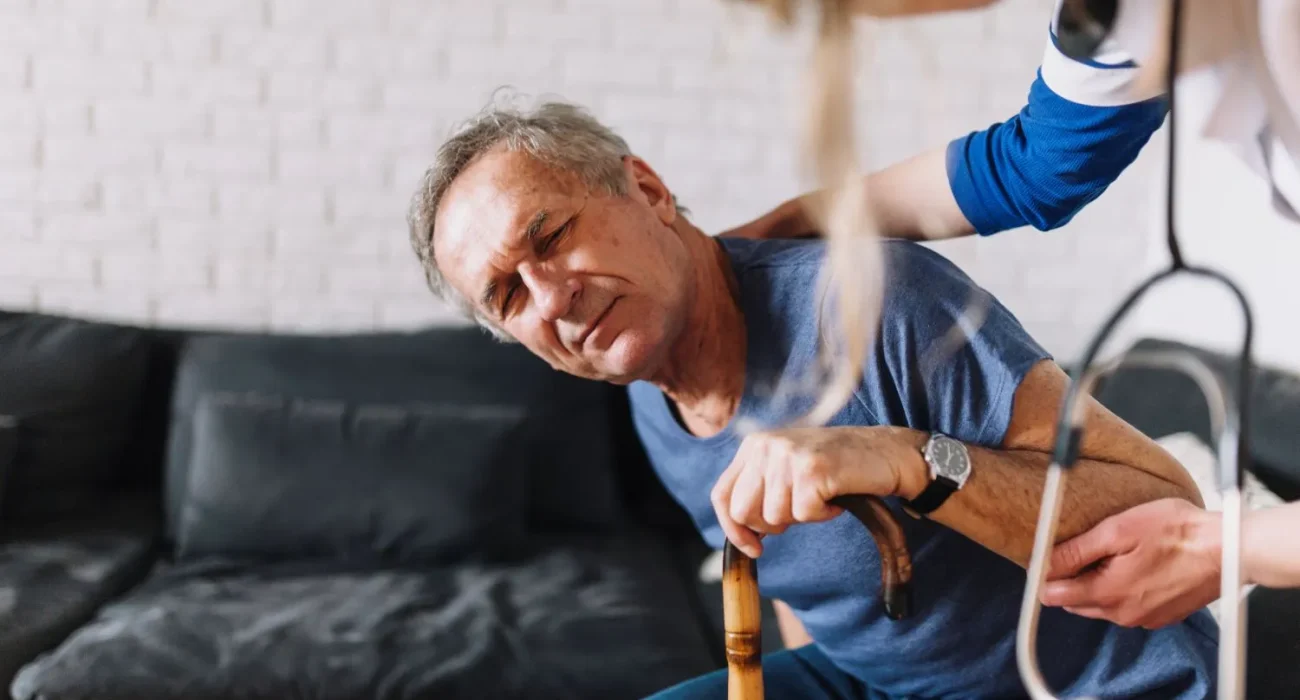
on the floor can make your heart skip a beat. At first, on what to do if an elderly person falls, you might rush over and pull them up immediately. However, this instant pulling up might affect the seniors more than providing them with relief.
Therefore, the common query of what to do if someone falls remains unanswered. Caregivers must know that falls are the leading cause of injury among adults aged 65 and older. However, knowing how to react can significantly improve the outcome.
Here is a comprehensive guide on the safe steps to take if an elderly person falls.
Phase 1: The Immediate Reaction for an Elderly Person Fall (0–2 Minutes)
The first few seconds of what to do if an elderly person falls is actually the time for assessment, not action.
Stay Calm and Breathe
In terms of if someone falls, what should you do, know that at first, do not panic. This is because the person who fell will panic. Significantly, a spike in their adrenaline can mask pain or cause them to struggle, potentially worsening an injury like a hairline fracture. Therefore, take a deep breath and speak in a low, soothing voice.
Prevent Further Movement
Next, on what to do when someone falls, instruct the person to stay exactly where they are. However, you must not try to get them up right away. Moving someone with a spinal injury or a broken hip prematurely can cause permanent damage or internal bleeding.
Check for Consciousness and Breathing
When an elderly person falls, check if they are unconscious, not breathing, or making gasping sounds. This is the point where you call emergency services (911 or your local equivalent) immediately. If they are conscious, move to the assessment phase.
Phase 2: The Physical Assessment When Elderly Fall
In the second phase of what to do if an elderly person falls, know that before attempting a save, you need to play detective. Ask questions and look for physical cues.
Look for Severe Injuries
Before helping someone up, scan the body for:
- Visible bleeding, and apply pressure if necessary.
- Look for deformities like if a limb looks out of place or shortened. This is a classic sign of a hip fracture.
- Check for bruising or swelling before helping a fallen person, as rapid swelling usually indicates a significant sprain or break.
Ask About Pain
In terms of helping someone up after a fall, ask the person to point to where it hurts. Specifically, check for:
- Head injuries, even a minor bump, can be dangerous for seniors, especially those on blood thinners (like Warfarin or Eliquis).
- If an elderly person experiences neck or back pain, do not move them.
Check for Red Flag Symptoms
If any of the following are present when the elderly fall, do not attempt to lift them. Call for professional medical help:
- Signs of a stroke (facial drooping, slurred speech).
- Chest pain.
- Severe confusion or loss of memory regarding the fall.
- Inability to move a limb.
Phase 3: The Safe Lift (If No Serious Injury is Suspected)
In the third phase of what to do if an elderly person falls, ask the person if they feel they can get up. Most importantly, follow this step if you haven’t identified any major injuries, but still proceed with the Four-Point Lift.
Notably, you should never deadlift a senior by their armpits as this can dislocate their shoulders or tear fragile skin.
Step-by-Step Guide on How to Get Up From a Fall
The following is a step-by-step guide on what to do if an elderly person falls:
The Roll
Have the person with a fall injury slowly roll onto their side.
The Crawl
In terms of how to lift a person who has fallen, assist them into a crawling position on hands and knees. If they have sore knees, place a towel or pillow underneath them.
The Support
Place a sturdy chair (or two) near them for lifting a fallen person. Have them move their hands onto the seat of the chair, one at a time.
The Lead Leg
Further, on what to do if an elderly person falls, ask them to bring their strongest leg forward, placing that foot flat on the floor. Keep in mind, they should now be in a kneeling position with their hands on the chair.
The Pivot
With a firm grip on the chair and by securing the falling injury by your hand, have them push up using their legs and arms simultaneously. Once standing, have them slowly pivot and sit in the chair to rest.
Phase 4: What To Do After a Fall (The Next 24–48 Hours)
The danger of what to do if an elderly person falls doesn’t end once they are back in bed or on the couch. Some injuries, particularly internal ones, take time to manifest.
Watch for Delayed Concussion Symptoms
If there was any head impact, watch for:
- Increased drowsiness or difficulty waking up.
- Nausea or vomiting.
- Pupils of unequal size.
- Sudden mood swings or irritability.
- If there is an injury, get first aid for falling.
Monitor Mobility
Sometimes a small ache turns into an inability to walk the next morning. If they are limping or refusing to bear weight on a leg, an X-ray is necessary.
Protect Your Loved One’s Independence by Securing Them from Another Fall
Phase 5: Elderly Fall Prevention and the Why
Once the crisis of what to do if an elderly person falls has passed, you must determine why the fall happened to prevent the next one. Falls are rarely just an accident but they are usually a symptom of an underlying issue.
Medication Review
Many medications cause orthostatic hypotension (a sudden drop in blood pressure when standing) or dizziness. Therefore, you must consult a doctor to see if their prescriptions need adjustment.
Home Hazards
Walk through the home and check for:
- Loose rugs and secure them with double-sided tape or remove them.
- Manage lighting by keeping it bright enough for nighttime bathroom trips.
- For added bathroom safety, install grab bars and non-slip mats in the shower.
Physical Therapy
Get your seniors to start strength and balance training (like Tai Chi or specialized PT). Essentially, these exercises can significantly reduce fall risk.
Fall Alert Devices
Fall alert systems are devices with advanced features with automatic fall detection. Having access to these devices can send immediate alerts to the caregivers so they can manage help on time and save seniors from complications.
In The End
Understanding what to do if an elderly person falls, you can help your elderly seniors. In addition, these approaches guarantee emotional support, as it is about physical safety. Caregivers must know that falls often cause seniors to become less active, leading to muscle weakness. This also leads to more falls. Therefore, it is important to be encouraging and never hesitate to call for professional help if something feels off.
H2: Why Choose MedRinger?
Designed with seniors in mind, MedRinger offers easy-to-use medical alert systems that provide dependable emergency assistance. In addition, our advanced devices come with automatic fall detection and 24/7 health monitoring that helps older adults remain active, secure, and worry-free.
Frequently Asked Questions (FAQs)
Not necessarily, but you should always notify their primary care physician. If they hit their head, are on blood thinners, or cannot move as well as they did before the fall, an ER visit or Urgent Care trip is mandatory. Internal bleeding and hairline fractures (especially in the hips) are common silent injuries in seniors.
The Four-Point Lift is a method that uses the senior’s own body mechanics and stable furniture to regain a standing position, rather than the caregiver pulling on the senior’s body.
The main reason is fear of losing independence. Many seniors worry that admitting to a fall will lead to their family moving them into an assisted living facility or taking away their car keys. It is vital to approach the conversation with empathy rather than “policing” their behavior.
Call emergency services (911) if the fall caused injury, severe pain, head impact, or if the person can’t get up. Otherwise, contact a family member, caregiver, or primary care doctor for help and follow-up.
If an elderly person keeps falling, see a doctor to check for balance issues, medications, vision problems, or underlying conditions. In addition, review medications that may cause dizziness or weakness and arrange physical therapy to improve strength and balance.